Arthroscopy Surgeon in Hisar: There’s a particular kind of frustration that comes with a knee or shoulder that just won’t cooperate. You twisted it playing cricket last month, or maybe it’s been clicking and catching for years, and every doctor you’ve shown it to has said something different — “it’s just a sprain,” “give it more rest,” “try some physiotherapy.” Meanwhile, the joint still locks up on you, or gives way when you’re climbing stairs, and nobody has actually looked inside the joint to see what’s going on.
That’s usually where arthroscopy enters the picture. It’s not a treatment on its own — it’s a way of seeing and fixing joint problems through tiny incisions instead of cutting the joint wide open, which means a diagnosis that’s actually accurate and a recovery that doesn’t put your life on hold for months.
Dr Sanjay Arora, practicing at Orthomed Hospital, Hisar, has been performing arthroscopic knee and shoulder procedures for over two decades — from ACL reconstructions in young athletes to meniscus repairs in patients who thought they’d just “pulled something.” If you’ve been told you might need arthroscopy, or you’re simply trying to understand why your joint won’t settle down, this guide should answer most of your questions.

What Is Arthroscopy?
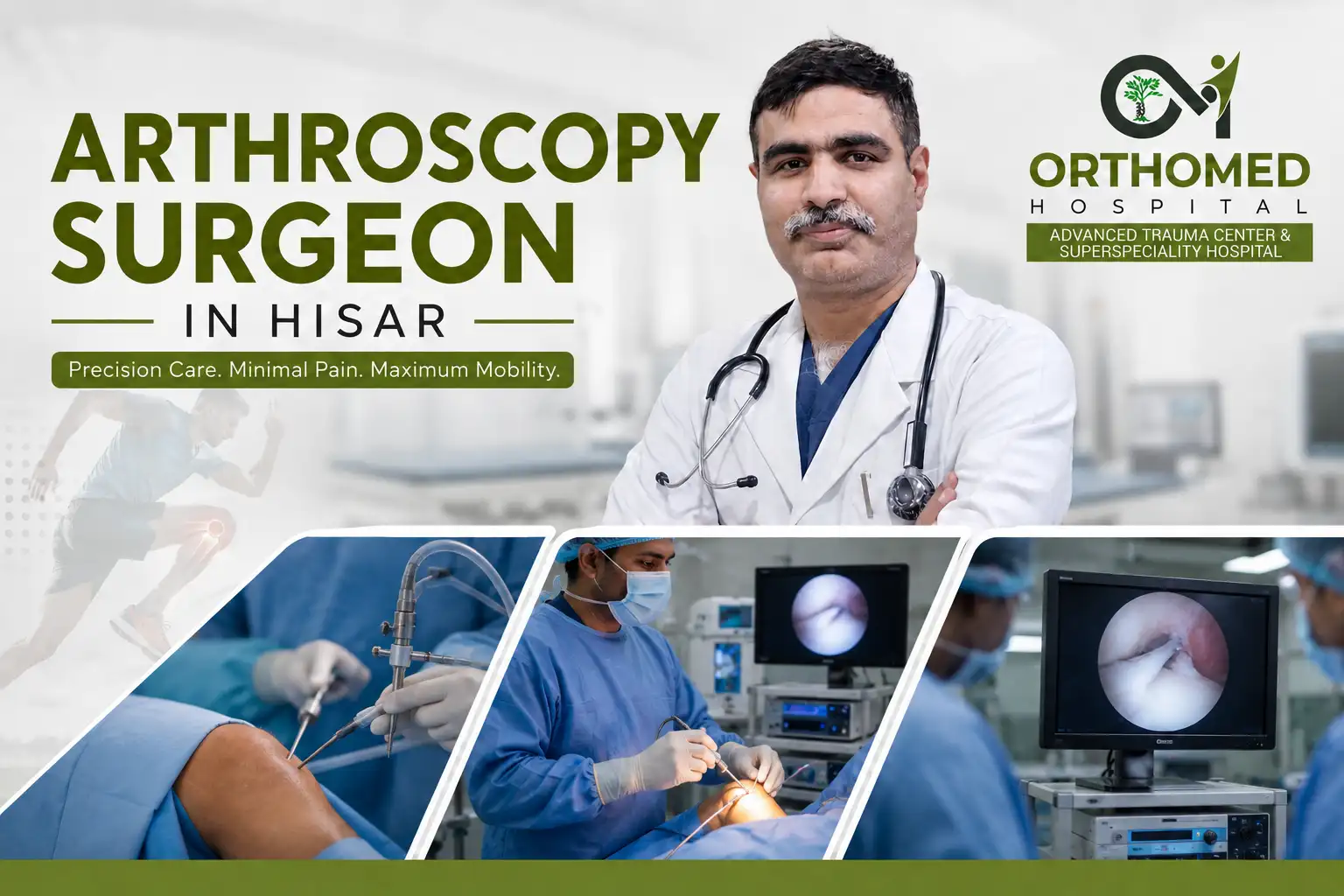
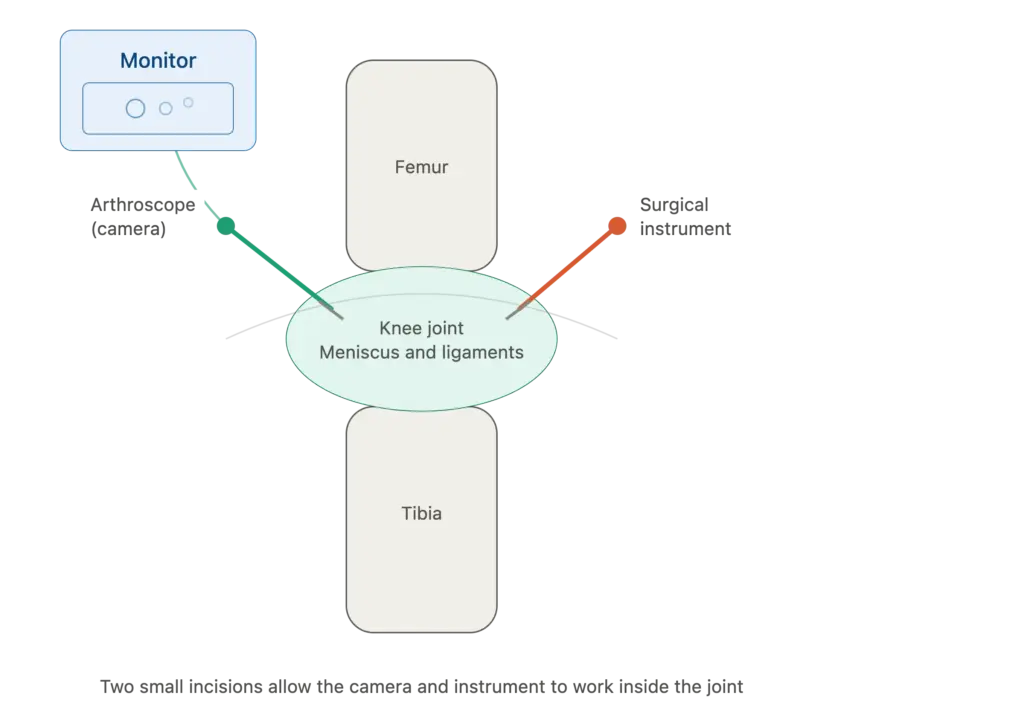
Arthroscopy is a minimally invasive surgical technique that allows a surgeon to look inside a joint using a small camera called an arthroscope, inserted through a tiny incision — usually less than a centimetre long. The camera sends live images to a monitor in the operating room, giving the surgeon a magnified, detailed view of the ligaments, cartilage and joint surfaces without needing to open the joint up.
If a problem is found — a torn ligament, damaged cartilage, or loose fragments floating in the joint — the surgeon can often treat it in the same sitting, using slender surgical instruments passed through one or two additional small incisions. This is why arthroscopy is often described as “diagnosis and treatment in one procedure.”
Compared to traditional open surgery, arthroscopy generally means:
- Smaller incisions and less scarring
- Less damage to the surrounding muscle and soft tissue
- Reduced post-operative pain
- Shorter hospital stay, often the same day or overnight
- Faster return to daily activities and, for athletes, to sport
It’s worth being clear that arthroscopy isn’t the right answer for every joint problem. Some conditions genuinely need open surgery or joint replacement, and a good surgeon will tell you honestly which category your case falls into rather than pushing arthroscopy simply because it’s a keyhole procedure.
Joints Commonly Treated with Arthroscopy
While arthroscopy can technically be used on several joints, the two Dr Arora sees most often in his Hisar practice are the knee and the shoulder:
- Knee arthroscopy – for ACL and PCL ligament tears, meniscus (cartilage) tears, loose bodies, and cleaning up damaged joint surfaces
- Shoulder arthroscopy – for recurrent dislocations, rotator cuff tears, labral tears, and impingement syndrome
- Ankle arthroscopy – for chronic ankle instability and cartilage injuries following repeated sprains
- Elbow arthroscopy – for loose bodies and certain cases of tennis elbow that haven’t responded to conservative treatment
- Wrist arthroscopy – for select ligament and cartilage injuries within the wrist joint
Knee and shoulder procedures make up the large majority of arthroscopic surgeries, simply because these joints are more prone to sports and overuse injuries.
Show Image
Conditions Treated Through Arthroscopy
Patients are referred to, or walk into, Dr Arora’s OPD with a wide variety of complaints. Arthroscopy is commonly used to diagnose and treat:
- ACL and PCL tears – ligament injuries that make the knee feel unstable or “give way,” often from sports or a sudden twist
- Meniscus tears – cartilage tears in the knee that cause locking, clicking, or pain on twisting movements
- Rotator cuff tears – shoulder tendon injuries common in middle-aged patients and overhead athletes
- Recurrent shoulder dislocation – a shoulder that keeps slipping out of place after an initial injury
- Labral tears – damage to the cartilage rim of the shoulder or hip joint
- Loose bodies – bone or cartilage fragments floating inside the joint that cause locking or catching
- Cartilage damage – early-stage wear that hasn’t yet progressed to needing joint replacement
- Synovitis – inflammation of the joint lining that hasn’t responded to medication
If any of this sounds like what you’ve been dealing with, it’s a reasonable next step to have it properly evaluated rather than continuing to manage it with painkillers and guesswork.
Signs You May Need an Arthroscopy Consultation
A lot of patients wait far longer than they should before getting a joint looked at properly. It’s worth booking a consultation if you notice:
- A joint that locks, catches, or gets “stuck” during movement
- Persistent swelling that keeps coming back
- A feeling of instability — the knee or shoulder “gives way” without warning
- Pain that hasn’t improved after several weeks of rest and physiotherapy
- A popping sound at the time of injury, followed by swelling within hours
- Reduced range of motion compared to the other side
- Ongoing pain that limits your ability to play sport, exercise, or work
None of these symptoms automatically mean you need surgery — but they do mean the joint deserves a proper look, ideally with a surgeon experienced in reading both the clinical picture and the imaging together.
Meet Dr Sanjay Arora
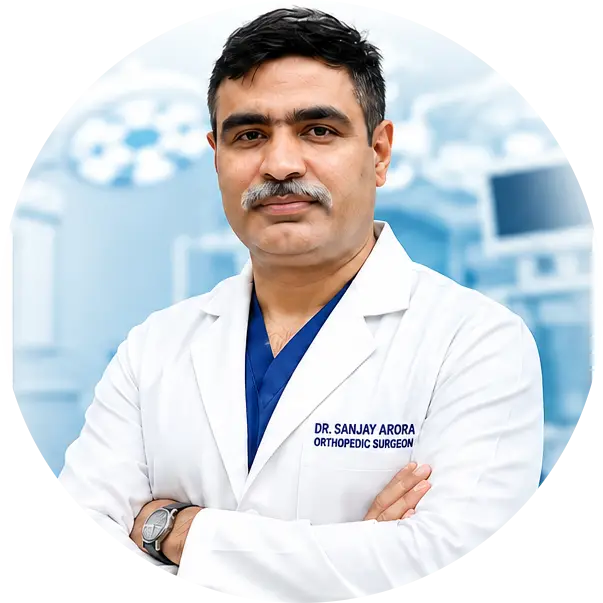
Dr Sanjay Arora is one of the most experienced arthroscopy surgeons practicing in Hisar today, with a clinical focus that spans joint replacement, sports injuries, and minimally invasive joint surgery. Patients travel to Orthomed Hospital from across Haryana specifically for his experience with arthroscopic knee and shoulder procedures.
His approach to arthroscopy is built around a few consistent principles:
- A thorough clinical examination before ordering any scan, so imaging confirms rather than replaces judgment
- Non-surgical treatment offered first wherever it’s a genuinely safe and effective option
- Arthroscopic surgery recommended only when there’s a structural problem that physiotherapy and bracing won’t fix
- Clear, honest conversations about what arthroscopy can and can’t achieve for a given joint
- A rehabilitation plan that starts almost immediately after surgery, not weeks later
For sportspersons in particular, Dr Arora is well known through his work as a sports injury specialist in Hisar, where arthroscopy is frequently the tool used to repair ligament and cartilage damage sustained on the field.
How Knee Arthroscopy Is Performed
While every case is individual, a typical knee arthroscopy at Orthomed Hospital follows a broadly consistent process:
- Anaesthesia – Usually spinal or regional anaesthesia, so the patient is comfortable and pain-free but often awake, or under sedation depending on the case
- Small incisions – Two or three tiny incisions, each just a few millimetres long, are made around the knee
- Camera insertion – The arthroscope is inserted through one incision, giving a magnified view of the inside of the joint on a monitor
- Diagnosis – The surgeon examines the ligaments, meniscus and cartilage surfaces to confirm the exact problem
- Treatment – Using fine instruments through the other incisions, the surgeon repairs or trims damaged tissue — for example, reconstructing a torn ACL using a graft, or trimming a torn meniscus
- Closure – The small incisions are closed with a stitch or two and covered with a dressing
- Recovery room – Most patients are monitored for a few hours before being discharged the same day or the following morning
Shoulder arthroscopy follows a similar principle, with incisions placed around the shoulder joint instead of the knee.
Recovery After Arthroscopy
One of the biggest reasons patients prefer arthroscopy over open surgery is the recovery timeline. That said, recovery still needs to be taken seriously — arthroscopy is minimally invasive, not a shortcut around healing time.
| Timeframe | What to Expect |
|---|---|
| Day 1–3 | Rest, elevation, pain management, and protecting the joint; walking with support if advised |
| Week 1–2 | Gradual reduction in swelling; light physiotherapy usually begins under supervision |
| Week 3–6 | Progressive strengthening exercises; most patients resume desk work and daily activities |
| Month 2–4 | Continued rehabilitation; return to light sport or gym activity, depending on the procedure |
| Month 4–9 | Full return to competitive sport for ligament reconstructions such as ACL surgery, once cleared by the surgeon |
Recovery speed varies depending on which structure was repaired — a simple meniscus trim heals far faster than a full ACL reconstruction. Dr Arora’s team sets realistic, procedure-specific timelines during the consultation rather than giving a generic “you’ll be fine in a few weeks” answer.
Show Image
Arthroscopy vs Open Surgery: Comparison
| Feature | Arthroscopy (Keyhole Surgery) | Open Surgery |
|---|---|---|
| Incision size | A few millimetres | Several centimetres |
| Tissue disruption | Minimal | More extensive |
| Hospital stay | Same day or overnight, in most cases | Usually longer |
| Post-operative pain | Generally lower | Generally higher |
| Scarring | Minimal | More visible |
| Recovery time | Typically faster | Typically slower |
| Suitable for | Most ligament, meniscus and cartilage repairs | Complex reconstructions or cases where the joint needs to be fully exposed |
Note: The right approach for any individual patient depends on clinical evaluation and imaging findings — this table is for general educational reference only.
Why Choose Orthomed Hospital for Arthroscopy in Hisar
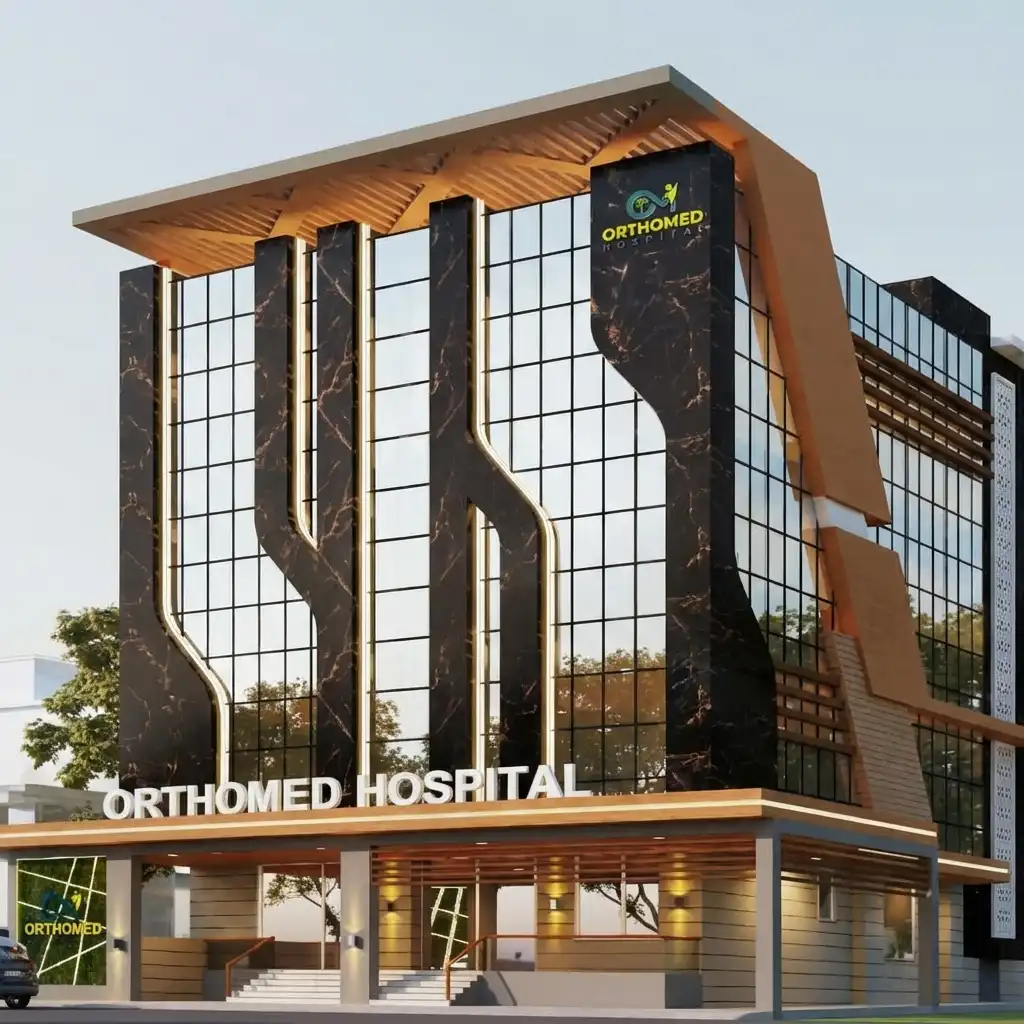
Orthomed Hospital brings together the diagnostic, surgical and rehabilitation support that arthroscopic surgery depends on, all under one roof:
- Modern operation theatres equipped for arthroscopic knee and shoulder procedures
- Dedicated physiotherapy support starting from the early days after surgery
- Imaging support, including MRI referrals, for accurate pre-surgical planning
- Experienced surgical team familiar with both routine and complex arthroscopic repairs
- Personalised treatment plans based on the patient’s age, sport, and activity goals
- Transparent guidance on when surgery is genuinely necessary — and when it isn’t
Learn more about the hospital’s overall facilities on our Best Orthopedic Hospital in Hisar page, which covers infrastructure, OT standards and patient care in more detail.
Arthroscopy Surgery Cost in Hisar
Patients frequently ask about the cost of arthroscopy in Hisar, and understandably so. It’s difficult to quote a fixed number because the cost depends on several individual factors:
- Which joint is involved, and whether it’s a diagnostic or reconstructive procedure
- Whether a ligament graft or implant is required (as in ACL reconstruction)
- Type of anaesthesia used
- Length of hospital stay
- Pre-surgical diagnostic tests, including MRI
- Post-operative physiotherapy and follow-up visits
Because these variables differ from patient to patient, the most reliable way to get an accurate estimate is a clinical consultation, where Dr Arora’s team can review your imaging and provide a treatment plan with a realistic cost breakdown.
Is Arthroscopy Right for You?
Not every joint problem needs arthroscopy, and Dr Arora is usually direct about this during consultations. As a general guide:
Arthroscopy is often appropriate when:
- Imaging and clinical examination confirm a structural tear (ligament, meniscus, or labrum)
- Symptoms like locking, instability or persistent swelling continue despite physiotherapy
- The patient wants to return to sport or an active lifestyle and needs the joint stabilised
Arthroscopy may not be necessary when:
- Symptoms are mild and improving with rest, physiotherapy or bracing
- The joint damage is early-stage and better managed conservatively for now
- Imaging doesn’t show a structural problem that surgery would actually fix
This is exactly why a proper consultation matters more than jumping straight to “do I need surgery” — sometimes the honest answer is not yet, and sometimes it’s the sooner the better.
How to Consult Dr Sanjay Arora
Step 1: Visit Orthomed Hospital (Sector 15AP, Kaimri Road, Hisar, Haryana)
Step 2: Book your OPD appointment by calling the clinic or using the online appointment form
Step 3: Bring any existing X-rays, MRI scans or reports so Dr Arora can assess your joint accurately during the first visit
Step 4: Discuss your symptoms, activity level and recovery goals to arrive at a treatment plan that’s realistic for you
Frequently Asked Questions
Who is the best arthroscopy surgeon in Hisar?
Dr Sanjay Arora is a widely recognised arthroscopy surgeon in Hisar, with over two decades of experience treating ligament tears, meniscus injuries, shoulder dislocations and cartilage damage through minimally invasive keyhole surgery at Orthomed Hospital.
Is arthroscopy a major surgery?
Arthroscopy is considered minimally invasive compared to open surgery, but it’s still a surgical procedure performed under anaesthesia. Most patients go home the same day or the next morning, with a noticeably shorter recovery than traditional open surgery.
How painful is recovery after arthroscopy?
Post-operative pain is generally lower than open surgery because the incisions are small and less tissue is disturbed. Most patients manage discomfort with prescribed pain medication and find it improves significantly within the first week or two.
How long does it take to walk normally after knee arthroscopy?
This depends on the procedure performed. Patients who’ve had a simple meniscus trim often walk with minimal support within days, while those recovering from ACL reconstruction typically need a more gradual, physiotherapy-guided return to full weight-bearing over several weeks.
Can arthroscopy be done on the shoulder as well as the knee?
Yes. Shoulder arthroscopy is commonly used to treat recurrent dislocations, rotator cuff tears and labral injuries, using the same keyhole technique as knee arthroscopy but adapted to the shoulder joint’s anatomy.
Do I need an MRI before arthroscopy?
In most cases, yes. An MRI helps confirm the diagnosis and allows the surgeon to plan the procedure precisely before going in, although the final decision on treatment is often confirmed during the arthroscopy itself.
When can athletes return to sport after arthroscopic surgery?
It varies by procedure and sport. A meniscus trim may allow return to light training within a few weeks, while ACL reconstruction typically requires four to nine months of structured rehabilitation before a safe return to competitive play.
Related Reading:
- Sports Injury Specialist in Hisar
- Knee Replacement Surgeon in Hisar
- Hip Replacement Surgeon in Hisar
- Best Orthopedic Hospital in Hisar
Conclusion
A joint that locks, gives way, or won’t stop swelling isn’t something you have to live with indefinitely — and it isn’t something that needs to end in a long, painful open surgery either. Arthroscopy has changed what’s possible for patients with ligament, meniscus and cartilage injuries, offering an accurate diagnosis and, in many cases, same-sitting treatment through incisions small enough to barely notice a few months later.
If you’re in Hisar or nearby areas of Haryana and dealing with a knee or shoulder that isn’t behaving the way it used to, it’s worth getting a proper opinion rather than continuing to guess. Book a consultation with Dr Sanjay Arora at Orthomed Hospital, Hisar, and get a clear, honest picture of whether arthroscopy — or something simpler — is the right path forward for you.
Medical Disclaimer: This article is intended for general informational and educational purposes only and should not be considered a substitute for professional medical advice, diagnosis, or treatment. Every patient’s condition is different, and treatment decisions should always be made in consultation with a qualified orthopaedic surgeon after a proper clinical evaluation. If you are experiencing joint pain or related symptoms, please consult Dr Sanjay Arora or another qualified healthcare provider for personalised guidance.