Knee Replacement Surgeon in Hisar | Orthomed Hospital: Healthy knees carry us through nearly every part of daily life — walking to the market, climbing stairs, sitting cross-legged for a family meal, or simply getting up from a chair without wincing. For many people in Hisar and the surrounding districts of Haryana, that simple freedom starts to slip away as knee arthritis sets in. What begins as an occasional ache after a long day can, over months and years, turn into a constant companion that makes even short walks feel like a chore.
Arthritis-related knee problems are becoming increasingly common across Haryana, driven by an ageing population, sedentary lifestyles, and rising rates of obesity. The good news is that knee pain is not something patients have to simply “live with.” With the right guidance from an experienced orthopaedic surgeon, most people can return to an active, comfortable life — sometimes without surgery, and when surgery is needed, with excellent long-term outcomes.
This guide is written for patients in Hisar and nearby areas who are searching for clear, honest information about Knee Replacement Surgeon in Hisar — what it involves, who needs it, what recovery looks like, and how to choose the right surgeon and hospital for their care.
Table of Contents
Key Takeaways
- Knee replacement surgery relieves pain and restores mobility for patients with severe arthritis or joint damage that no longer responds to medicines or physiotherapy.
- There are several types of knee replacement — total, partial, revision, and robotic-assisted — and the right choice depends on the extent of joint damage.
- Most patients begin walking with support within a day or two of surgery, with full recovery typically taking a few months.
- Dr. Sanjay Arora at Orthomed Hospital, Hisar, offers evaluation and treatment for knee and hip conditions, including robotic knee replacement and arthroscopy.
- Choosing a surgeon should be based on experience, qualifications, hospital infrastructure, and the quality of post-surgery rehabilitation — not on location alone.
What is Knee Replacement Surgery?
Knee replacement surgery, medically known as knee arthroplasty, involves resurfacing a damaged knee joint with an artificial implant to relieve pain and restore function. It is generally recommended when the cartilage that cushions the knee joint has worn away significantly, causing bone-on-bone friction, pain, and stiffness that limit daily activities.
There isn’t a single “one type fits all” approach to knee replacement. Depending on how much of the joint is damaged and the patient’s overall health, an orthopaedic surgeon may recommend one of the following:
Total Knee Replacement (TKR) This is the most common procedure, where the entire knee joint surface — the end of the thigh bone (femur), top of the shin bone (tibia), and sometimes the kneecap (patella) — is resurfaced with metal and plastic components. TKR is typically advised when arthritis affects the whole joint.
Partial Knee Replacement When damage is limited to only one compartment of the knee (most often the inner side), a partial replacement may be an option. This preserves more of the patient’s natural bone and ligaments, which can mean a smaller incision and quicker early recovery for the right candidate.
Revision Knee Replacement Over time, an artificial joint may wear out, loosen, or develop complications, especially many years after the original surgery. Revision surgery replaces the older implant with a new one and is a more complex procedure requiring specialised experience.
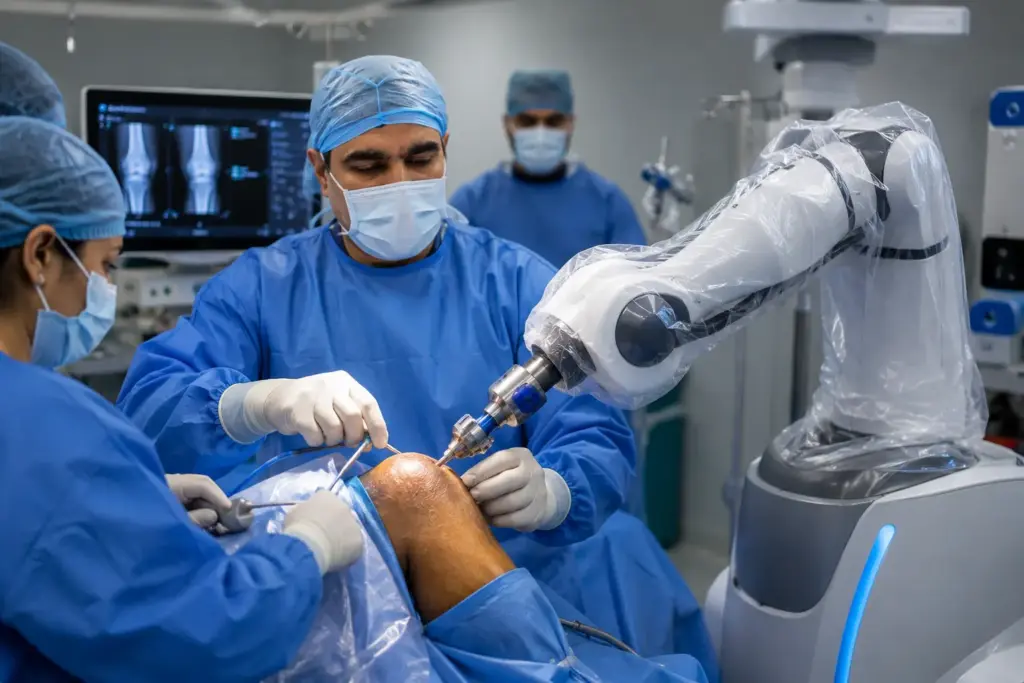
Robotic Knee Replacement This approach uses robotic-arm assisted technology to help the surgeon plan and execute bone cuts with greater precision, based on a 3D map of the patient’s own knee anatomy. It doesn’t replace the surgeon’s skill — it supports it with additional accuracy during implant positioning.
Are you looking for Knee Replacement Surgeon in Hisar – Book An Appointment Now
Who Needs Knee Replacement Surgery?
Not every ache in the knee calls for surgery. Most patients start with conservative treatment, and surgery becomes a consideration only when pain and disability significantly affect quality of life. Common signs that suggest it may be time to consult an orthopaedic surgeon include:
- Persistent knee pain that continues despite medication, rest, and physiotherapy
- Swelling around the knee joint that doesn’t settle down
- Difficulty walking, especially climbing stairs or getting up from a low chair
- Visible bow-leg or knock-knee deformity that has developed over time
- Stiffness that limits how far the knee can bend or straighten
- Diagnosed arthritis that has progressed on X-rays despite treatment
- Knee pain that disturbs sleep or limits basic daily tasks like bathing or dressing
If several of these symptoms sound familiar, it’s worth having a proper clinical evaluation rather than waiting for things to worsen further.
Signs You Should See a Knee Specialist — Quick Checklist
- Knee pain lasting more than 3 months
- Pain that worsens with walking or climbing stairs
- Swelling that recurs or doesn’t fully go down
- A grinding or clicking sensation in the knee
- Reduced range of motion compared to before
- Knee pain that wakes you up at night
- Visible change in leg alignment (bowing inward or outward)
- Reliance on painkillers just to get through the day
- Difficulty with simple tasks — squatting, sitting cross-legged, or getting out of a car
If you’re checking off three or more of these, scheduling a consultation with an orthopaedic surgeon is a reasonable next step.
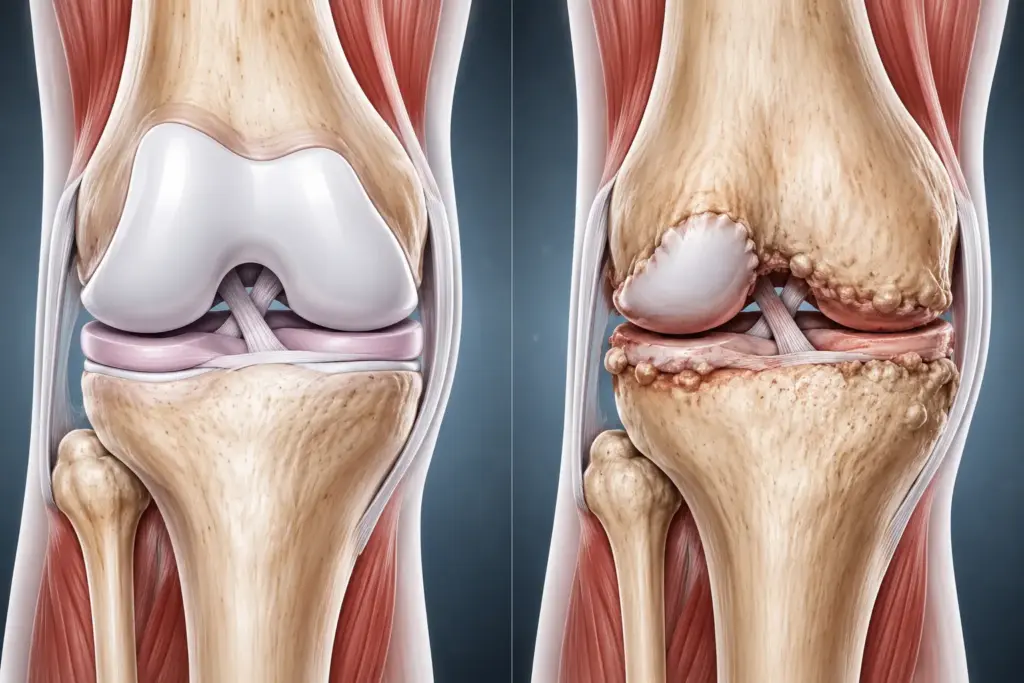
Common Causes of Knee Joint Damage
Knee joint damage rarely happens overnight. It usually develops gradually, from one or a combination of the following causes:
- Osteoarthritis – the most common cause, where cartilage gradually wears down with age and use
- Rheumatoid Arthritis – an autoimmune condition that causes chronic inflammation and joint damage
- Injury – ligament tears, fractures, or dislocations that affect joint mechanics over time
- Trauma – accidents or falls that damage bone or cartilage directly
- Sports Injuries – repetitive stress or acute injuries common in athletes and active individuals
- Obesity – excess body weight significantly increases the load on knee joints, accelerating wear
- Aging – natural wear and tear that adds up over decades of joint use
Understanding the underlying cause helps the surgeon decide whether non-surgical treatment can still help, or whether joint replacement is the more appropriate path forward.
Benefits of Knee Replacement Surgery
For patients whose arthritis has progressed to the point where daily life is significantly affected, knee replacement can be genuinely life-changing. Reported benefits include:
- Pain relief — most patients experience substantial reduction in joint pain after recovery
- Better mobility — walking, climbing stairs, and standing become noticeably easier
- Improved quality of life — everyday activities that were once difficult become manageable again
- Better sleep — many patients find that pain-related sleep disturbances improve significantly
- Return to activities — patients often resume walking, light exercise, travel, and hobbies they had given up
It’s worth setting realistic expectations: recovery takes time and commitment to physiotherapy, and outcomes vary from person to person based on age, health, and how closely rehabilitation guidance is followed.
Meet Dr. Sanjay Arora – Knee Replacement Surgeon in Hisar
Dr. Sanjay Arora is an orthopaedic surgeon practising at Orthomed Hospital in Hisar, with a clinical focus on knee and hip joint conditions. His practice covers a broad spectrum of orthopaedic care, allowing patients to receive continuity of treatment from initial diagnosis through surgery and rehabilitation.
Areas of clinical focus include:
- Knee Replacement Surgery — total, partial, and revision procedures tailored to the extent of joint damage
- Hip Replacement — for patients with hip arthritis or joint degeneration
- Robotic Knee Replacement — using robotic-assisted technology for precision implant positioning
- Arthroscopy — minimally invasive keyhole procedures for diagnosing and treating joint problems, including meniscus repair
- Sports Medicine — treatment of injuries common among athletes and physically active patients
- Joint Preservation — non-surgical and early-intervention approaches aimed at delaying or avoiding joint replacement where possible
- Trauma Surgery — management of fractures and injuries requiring orthopaedic intervention
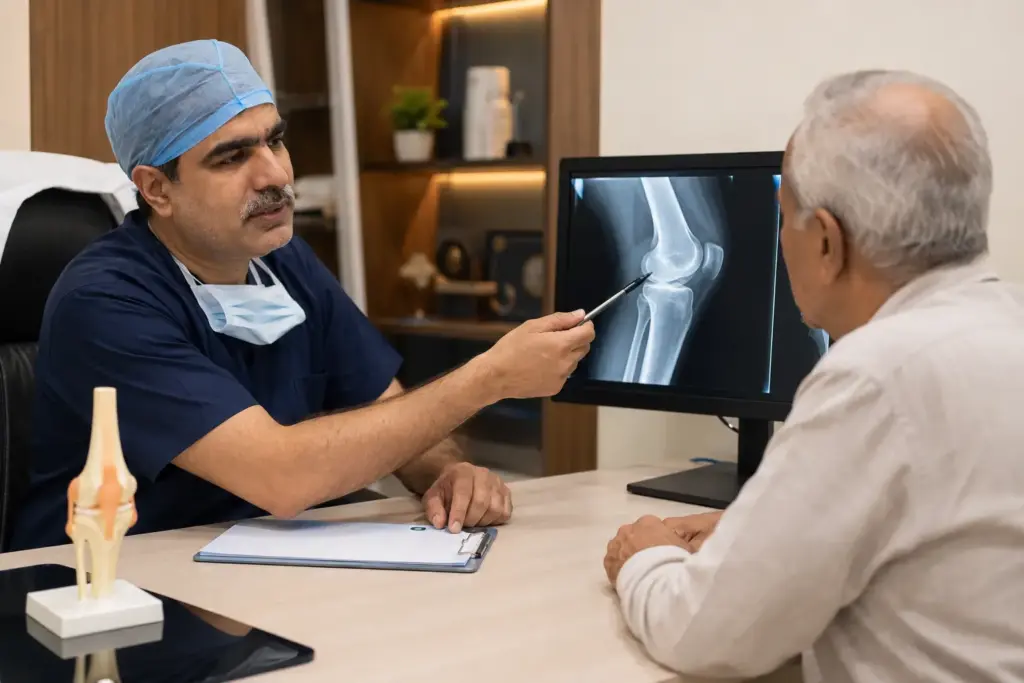
Patients considering knee replacement in Hisar are encouraged to bring their previous reports, X-rays, or MRI scans to the first consultation so that Dr. Arora can provide a clear, individualised assessment of treatment options — surgical or otherwise.
Why Choose Orthomed Hospital Hisar?
Orthomed Hospital in Hisar is built around a focus on orthopaedic and joint care, offering patients access to diagnostic, surgical, and rehabilitation services under one roof. Key aspects of the hospital’s approach include:
- Infrastructure designed to support orthopaedic surgeries and post-operative recovery
- Modern Operation Theatres equipped for joint replacement and arthroscopic procedures
- Physiotherapy services to support recovery from the early post-operative days through full rehabilitation
- Diagnostic support including imaging needed for accurate pre-surgical planning
- Personalized treatment planning based on each patient’s age, activity level, and degree of joint damage
- Patient safety protocols followed through pre-operative assessment, surgery, and post-operative monitoring
For patients evaluating the best hospital for knee replacement in Hisar, it helps to ask directly about the hospital’s infrastructure, physiotherapy support, and how post-surgery follow-up is structured — these factors matter as much as the surgery itself.
Robotic Knee Replacement
Robotic knee replacement is one of the more talked-about advances in joint replacement surgery. Here’s what it actually involves:
What it is A robotic-arm assisted system helps the surgeon plan the surgery using a 3D model of the patient’s knee, built from pre-operative imaging. During surgery, the robotic arm assists with executing bone cuts precisely according to this plan.
Benefits Proponents point to improved accuracy in implant alignment and positioning, which may contribute to more balanced joint mechanics after surgery.
Precision The technology is designed to reduce variability in bone preparation compared to fully manual techniques, though the surgeon’s judgment and experience remain central to the outcome.
Recovery Recovery timelines for robotic-assisted knee replacement are broadly similar to conventional knee replacement, though some patients report a smoother early recovery due to more precise soft-tissue balancing.
Who is eligible Not every patient is automatically a candidate. Eligibility depends on factors like the extent and pattern of joint damage, bone quality, and overall health — something your surgeon will assess during consultation.
Minimally Invasive Knee Replacement
Minimally invasive techniques aim to achieve the same surgical goals through a smaller surgical footprint. Key features include:
- Small incision — a shorter cut compared to traditional open surgery
- Less blood loss — reduced tissue disruption can mean lower blood loss during the procedure
- Faster recovery — many patients mobilise sooner after surgery
- Reduced pain — smaller incisions may translate to less post-operative discomfort for some patients
As with robotic surgery, not every patient is a candidate for a minimally invasive approach — the surgeon will evaluate joint deformity, bone quality, and overall health before recommending the best technique.
Non-Surgical Treatments Before Knee Replacement
Surgery is rarely the first step. Most orthopaedic surgeons, including those managing knee arthritis in Hisar, start with conservative management:
- Medicines — anti-inflammatory and pain-relief medication to manage symptoms
- Physiotherapy — targeted exercises to strengthen muscles around the knee and improve flexibility
- PRP (Platelet-Rich Plasma) therapy — an injection-based treatment sometimes used to support joint healing
- Hyaluronic Acid Injections — used to supplement joint lubrication in some patients
- Weight loss — reducing load on the knee joint, which can meaningfully ease symptoms
- Lifestyle changes — modifying activities that aggravate the knee, along with using supportive footwear or walking aids where needed
Surgery is generally considered only when these measures no longer provide adequate relief and the patient’s quality of life continues to be significantly affected.
Knee Replacement Surgery Procedure
While every patient’s journey is individualised, the general process typically follows these steps:
- Consultation — A detailed history, physical examination, and discussion of symptoms and goals with the orthopaedic surgeon
- Diagnosis — X-rays and, where needed, MRI scans to assess the extent of joint damage and confirm the diagnosis
- Surgery — The joint replacement procedure itself, performed under appropriate anaesthesia in a modern operation theatre
- Recovery — Post-operative monitoring, pain management, and early mobilisation under medical supervision
- Physiotherapy — Structured rehabilitation exercises that begin soon after surgery and continue for weeks to months afterward
Recovery Timeline
Recovery is gradual, and while individual timelines vary, most patients can expect a general pattern like this:
| Timeframe | What to Expect |
|---|---|
| Week 1 | Hospital stay, pain management, and first steps with walker/support under supervision |
| Week 2–6 | Progressive walking, physiotherapy sessions, gradual reduction in swelling and stiffness |
| Month 2–3 | Improved strength and range of motion; most patients resume light daily activities |
| 6 Months | Continued improvement in strength and endurance; many patients return to routine activities |
| 1 Year | Maximum benefit typically achieved, with most patients enjoying significantly improved mobility |
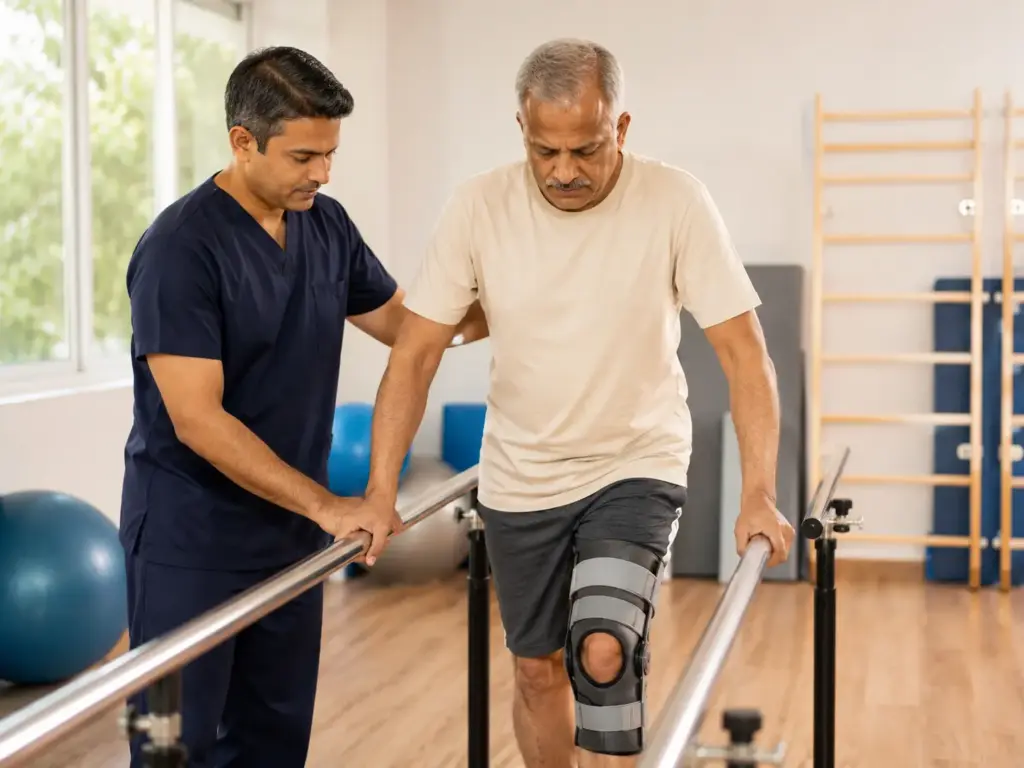
Individual results depend on age, overall health, the type of surgery performed, and adherence to the physiotherapy program.
Knee Replacement Surgery Cost in Hisar
One of the most common questions patients ask is about knee replacement surgery cost near Hisar, Haryana. It’s important to understand that cost varies significantly from patient to patient, depending on several factors:
Knee Replacement Surgery Cost at Orthomed Hospital
Total Knee Replacement (U/L)
Surgery + Anesth + Medicine – Rs.100000 (Approx.)
Implant – Rs.78000 – Rs.80000
Room Charge: Rs.3500/Day
Test Charge (Blood,Urine, ECg, CT Scan, MRI etc.)- Extra (As per advised)
Total Knee Replacement (B/L)
Surgery + Anesth + Medicine – Rs.335000 (COCR) – 385000 (OXINIUM)
Implant – All Inclusive
Room Charge: All Inclusive
Test Charge (Blood,Urine, ECg, CT Scan, MRI etc.)-All Inclusive
Note: Cashless Treatment Available (Haryana Govt. & Other Pannel Insurance Companies)
- Type of procedure (total, partial, or revision knee replacement)
- Whether robotic-assisted technology is used
- Type of implant selected
- Length of hospital stay required
- Pre-surgical diagnostic tests and consultations
- Post-operative physiotherapy and rehabilitation needs
- Any additional medical conditions requiring management during treatment
Because these variables differ for every patient, it’s not possible to quote a standard price without a proper clinical evaluation. The most reliable way to understand your specific cost is to schedule a consultation, where the surgeon and hospital team can provide a detailed estimate based on your individual treatment plan.
Choosing the Best Knee Replacement Surgeon in Hisar
With so many options available — from local clinics to hospitals in Delhi and beyond — patients often ask, who is the best doctor for knee replacement surgery? There’s no single universal answer, but these factors consistently matter:
- Experience — years of practice and volume of joint replacement procedures performed
- Qualifications — relevant orthopaedic training and specialisation in joint replacement
- Technology — access to modern tools, including robotic-assisted systems where appropriate
- Reviews — feedback from previous patients about their experience and outcomes
- Hospital Facilities — quality of operation theatres, diagnostic support, and nursing care
- Rehabilitation — availability of structured physiotherapy and follow-up support after surgery
Patients researching which is the best hospital for knee replacement should visit in person where possible, ask detailed questions during consultation, and evaluate how comfortable they feel with the surgical team’s communication and transparency.
How Hisar Compares with Delhi & Other Cities
Many patients in Haryana search for options beyond their city — looking into the top 10 knee replacement surgeons in Delhi, exploring best knee replacement surgeons in India, or even researching famous knee replacement doctors in Hyderabad. This is a natural instinct when facing a major surgical decision.
However, bigger cities don’t automatically mean better outcomes. What actually determines the success of a knee replacement is:
- The individual surgeon’s experience and skill
- The quality and safety standards of the specific hospital
- How personalised and attentive the pre- and post-operative care is
- The strength of the physiotherapy and rehabilitation support after surgery
For many patients in Hisar and nearby towns, choosing a qualified local surgeon means easier access for follow-up visits, physiotherapy sessions, and family support during recovery — all of which meaningfully affect the overall surgical experience. The right choice is the one that fits your specific clinical needs, not simply the city with the most name recognition.
Total vs Partial vs Robotic Knee Replacement: Comparison Table
| Feature | Total Knee Replacement | Partial Knee Replacement | Robotic Knee Replacement |
|---|---|---|---|
| Extent of joint replaced | Entire knee joint | Only the damaged compartment | Entire or partial, robot-assisted |
| Best suited for | Widespread arthritis across the joint | Damage limited to one compartment | Cases needing high precision in alignment |
| Incision size | Standard | Often smaller | Standard to minimally invasive |
| Bone preserved | Less | More | Depends on extent of replacement |
| Precision of bone cuts | Surgeon-guided | Surgeon-guided | Robotic-arm assisted planning |
| Typical hospital stay | Similar across all types, per surgeon’s assessment | Similar across all types, per surgeon’s assessment | Similar across all types, per surgeon’s assessment |
| Candidacy | Determined by surgeon after evaluation | Determined by surgeon after evaluation | Determined by surgeon after evaluation |
Note: The right option for any individual patient depends on a clinical evaluation, imaging, and discussion with the orthopaedic surgeon — this table is for general educational reference only.
Frequently Asked Questions
1. What exactly is knee replacement surgery?
Knee replacement surgery is a procedure where a damaged knee joint is resurfaced with an artificial implant to relieve pain and improve movement. It’s usually recommended when arthritis or injury has worn down the cartilage, causing bone-on-bone friction, stiffness, and significant pain that daily medicines or therapies can’t manage.
2. What types of knee replacement are available?
Total Knee Replacement (TKR): The entire knee joint surface is replaced. Ideal for widespread arthritis.
Partial Knee Replacement: Only the damaged section of the knee is replaced, preserving more bone and allowing faster early recovery.
Revision Knee Replacement: Done when an earlier knee implant wears out or causes problems, replacing it with a new one.
Robotic-Assisted Knee Replacement: Uses a robotic arm to help the surgeon operate with very precise bone cuts based on a 3D knee model.
3. How do I know if I need knee replacement surgery?
Not all knee pain means surgery is needed. Consider consulting an orthopaedic surgeon if you experience persistent knee pain that doesn’t improve with medicines or physiotherapy, swelling that won’t go down, difficulty walking or climbing stairs, stiffness limiting your knee movement, visible changes in leg shape, or pain that disturbs sleep and daily tasks.
4. What are the benefits of having knee replacement surgery?
Significant pain relief after recovery
Improved mobility and easier movement
Better quality of life and return to normal activities
Enhanced sleep quality due to less pain
Ability to safely resume walking, light exercise, and hobbies
5. Is robotic knee replacement better than traditional surgery?
Robotic-assisted surgery aims to improve the accuracy of implant placement by using advanced technology, which can help with more balanced knee movement post-surgery. However, it does not replace the surgeon’s skill but supports it. Recovery time is similar to traditional surgery, and not all patients are candidates for this method.
6. What does recovery look like after knee replacement?
Most patients walk with support within a day or two post-surgery. Early weeks focus on gradually increasing walking ability and physiotherapy. By 2-3 months, many reach better strength and motion levels, with ongoing improvement up to a year. Following your physiotherapy plan closely is key for the best results.
7. Are there non-surgical options I should try first?
Absolutely. Treatments like medicines, physiotherapy exercises, injections (like PRP or hyaluronic acid), weight loss, and lifestyle changes can often help manage knee pain and delay surgery if possible.
8. How much does knee replacement surgery cost in Hisar?
Costs vary depending on factors such as the type of surgery, implants used, hospital stay length, and post-operative care needs. A detailed consultation with Dr. Sanjay Arora at Orthomed Hospital will provide you with an accurate estimate tailored to your condition.
Important Links:-
- Indian Orthopaedic Association
- American Academy of Orthopaedic Surgeons – patient education pages
- National Health Portal India – Arthritis information
- Ministry of Health & Family Welfare, Government of India
Conclusion
Living with chronic knee pain can quietly limit far more of daily life than most people realise — from a morning walk to simply playing with grandchildren without discomfort. Whether you’re just starting to explore your options or have already been told that knee replacement may be necessary, getting a clear, honest evaluation from an experienced orthopaedic surgeon is the most important first step.
If you’re in Hisar or the surrounding areas of Haryana and dealing with persistent knee pain, consider scheduling a consultation with Dr. Sanjay Arora at Orthomed Hospital, Hisar. A thorough evaluation — including your history, imaging, and treatment goals — can help you understand which options, surgical or non-surgical, are right for your specific condition. Reach out to Orthomed Hospital today to take the next step toward a more comfortable, mobile life.
Medical Disclaimer: This article is intended for general informational and educational purposes only and should not be considered a substitute for professional medical advice, diagnosis, or treatment. Every patient’s condition is different, and treatment decisions should always be made in consultation with a qualified orthopaedic surgeon after a proper clinical evaluation. If you are experiencing knee pain or related symptoms, please consult Dr. Sanjay Arora or another qualified healthcare provider for personalised guidance.